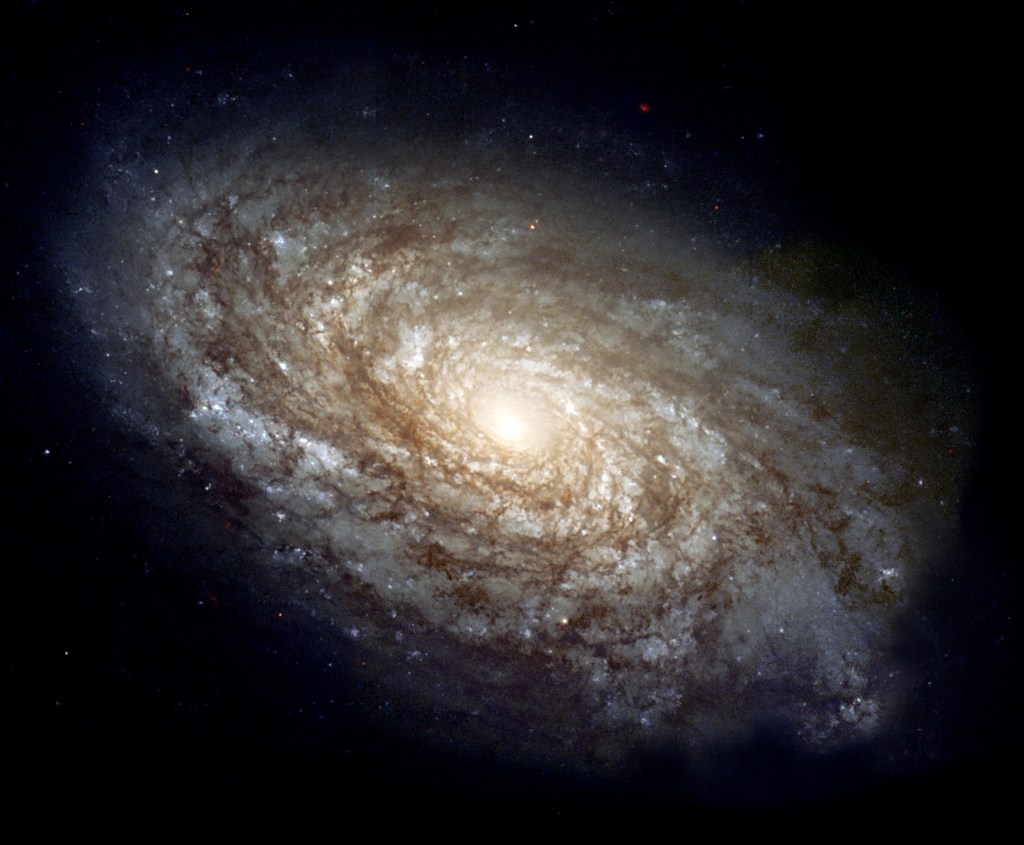
What do the boundaries of the State of Michigan have to do with the ultimate fate of the Universe? Strap in, we’re going for a ride!
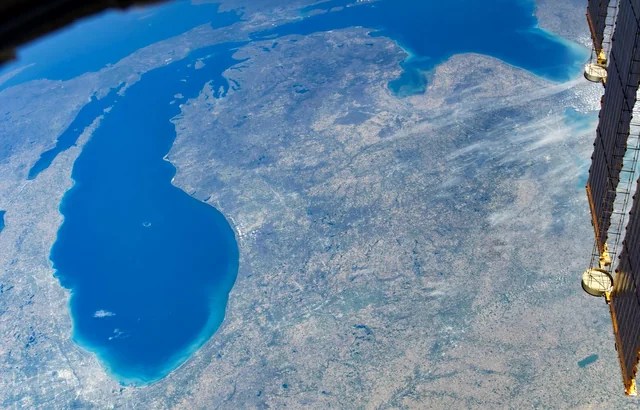
On a recent trip with friends to Michigan and Indiana, I learned about the Toledo War, a boundary dispute during the early years of Michigan history. The region has been a crossroads and subjected to conflicting claims for thousands of years, first by numerous Native American tribes calling it home through the centuries, then by French, English, and ultimately American settlers beginning in the 1600’s.
This story begins in 1784 with the creation of the Northwest Territory. New York, Massachusetts, Connecticut, and Virginia all had claims to parts of the Northwest Territory stretching from the western border of Pennsylvania and New York all the way to the Mississippi River and north to Canada, which all had to be resolved as the newly formed country found it’s footing. The British were also still in possession of parts of Michigan, particularly the fort at Detroit. After Jay’s Treaty and the Battle of Fallen Timbers in 1794, the southern peninsula was finally in American hands.
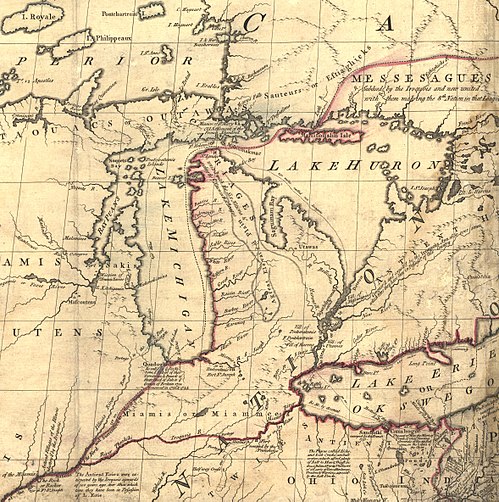
In 1800, that area was attached to the newly formed Indiana Territory. The first, and most important step in the coming disputes was the creation of the state of Ohio in 1803, using surveying information from what was called “The Mitchell Map” which incorrectly showed the southern tip of Lake Michigan laying further north than it actually is. Then in 1805, the Michigan territory was created, establishing the southern border as a line extending from the most southerly tip of Lake Michigan due east to the intersection with Lake Erie. At the time, Ohio was convinced that their founding boundaries included the mouth of the Maumee River, where the City of Toledo would grow as an important port. The creation of the Michigan territory waved away Ohio claims about the eastern boundary.
In 1816, when Indiana joined the Union, it was determined the new state needed access to Lake Michigan, so the southern border of Michigan on the west side was moved 10 miles north, giving Indiana 45 miles of coastline on the lake to the present day. This was done over the objections of Michigan leaders at the time.
Dueling surveys kept the eastern boundary issue in dispute, with Michigan claiming territory to the south of Lake Erie. From then on, Michigan expanded, to include all the territories that would eventually become Wisconsin, Minnesota, and parts of Iowa, North Dakota, and South Dakota. In 1835, the Toledo issue finally came to a head, with an armed standoff between Michigan and Ohio militias at Toledo to determine which state Toledo belonged to. The “Toledo War” ended after two years of skirmishing and posturing with the intercession of President Andrew Jackson who held out the prospect of Michigan statehood if they gave up the claim to the Toledo Strip. Despite what they felt were their stronger, legitimate claims, Michigan acquiesced and became a state in 1837. Upon admission, Michigan gave up the western portions of the Upper Peninsula (future Wisconsin and Minnesota) and assumed its current borders.
What does this have to do with the fate of the Universe? The origins of the many disputes, shifting borders, and conflicts started with measurements, in this case, the surveying of Lake Michigan, Lake Erie and the land in between. Because of mistakes made early on, and the subsequent decisions based on those incorrect measurements, a lot of problems ensued.
Although he visited Chicago several times, Albert Einstein never went to Michigan. If he had, and learned about Michigan borders, he likely would have been sympathetic with the chaos from incorrect measurements.
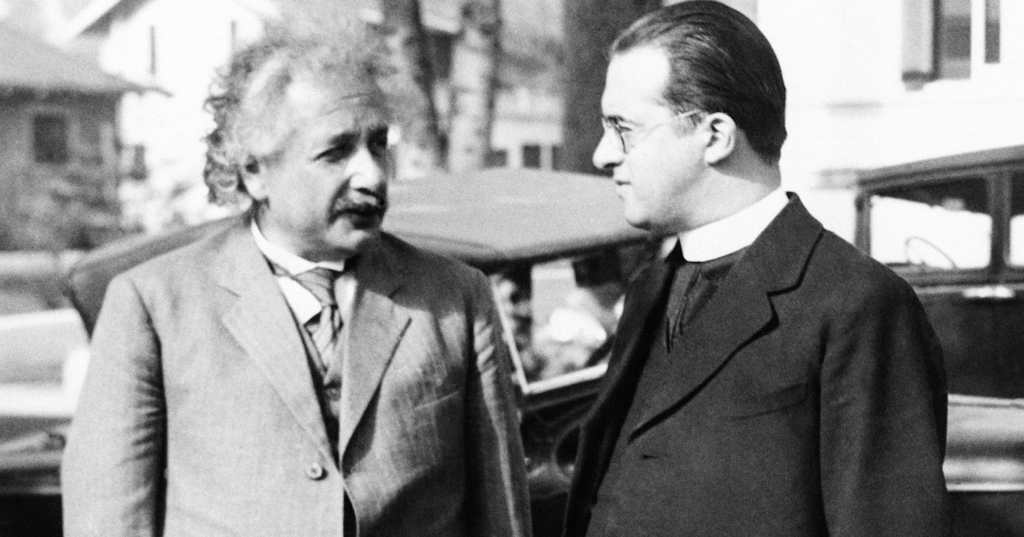
In 1917, he introduced a modification of his equations for General Relativity, introducing what he called a Cosmological Constant, denoted by the Greek letter lambda (Λ). He did this because he realized that gravity would cause the Universe to eventually collapse from mutual gravitation, and he wanted the equations to show a stable Universe. By the late 1920’s, the work of Father Georges LeMaitre, a Belgian Catholic priest, and Edwin Hubble, convinced Einstein that the Universe was expanding on it’s own, and he didn’t need the Λ in his original equation, which he called his “biggest blunder”.
There things stood until 1998 when data from measuring a type of supernova revealed that not only was the Universe expanding, but the expansion was accelerating, necessitating the reintroduction of Λ back into equations. This became what is called today Dark Energy. This has been since confirmed by two other sources, but all three also conflict with each other, further adding uncertainty to what is going on.
The reason this matters for the fate of the Universe is if Λ is too small, gravity ultimately wins, the expansion of the Universe stops, then everything begins collapsing inward, resulting in the Big Crunch.
On the other hand, too much Λ and everything flies apart, and the Universe dies in cold darkness, expanding forever.
There’s a third option, called Vacuum Decay, that comes out of quantum mechanics that posits a spontaneous disintegration of spacetime, radiating outward and consuming everything. Fortunately, there is very little evidence of this beyond theoretical equations.
Like the borders of Michigan, set on a journey of conflict and revision due to measurements in the beginning, our grasp of the nature of our Universe and its destiny are under constant scrutiny and reappraisal based on new, better theories and measurements. Such is science. Hopefully, the resolution is one that allows for us to be around a while longer.
 Robert Wack
Leave a comment