One challenge all writers of fiction encounter at some point is how much detail to give, especially around interesting plot points. Too much, and you risk killing the narrative flow by sounding tedious and pedantic. Too little, and the reader may become confused and lose interest. I call this Breadcrumbs versus Spoonfeeding.
Every cool story I’ve written runs up against this when my early readers go through the first couple of drafts. My brilliant wife has admonished me on more than one occasion for expecting readers to read my mind as well as the page. “You live in this world 24/7. We can’t see what you see. You have to give more details!”
Yet leaving some key things out creates tension, makes the reader uncomfortable, and motivates them to turn the page to answer the questions the story provokes. Still, the line between “Ooh, I wonder what happens next?” and “What the *#&@! is going on?” can be blurry and thin.
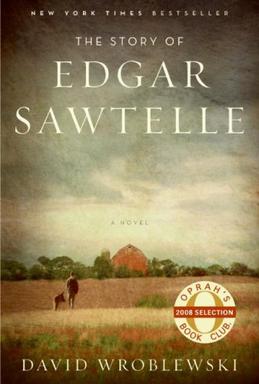
Which brings me to The Story of Edgar Sawtelle, a brilliant novel by David Wroblewski. I can’t remember who recommended this book to me, but it was likely one of my extended family, almost all of whom are “dog people”. It is a beautifully written story of a boy and his dog, in a world suffused with love and pain, within families, between humans and dogs, and in the wider world. Though it’s not science fiction, it revolves around a “what if” question that Wroblewski masterfully explores and portrays in scintillating detail. This book is definitely on my short list of all-time favorites.
I read it at some point while I was writing Time Bomber and was struggling with breadcrumbs and spoonfeeding. Again, I don’t remember why or how, but I stumbled on an episode of Oprah Winfrey’s bookclub, where they discussed the book with Wroblewski and gatherings of the bookclub members. What I saw was an epiphany that changed how I think about breadcrumbs. You can watch the episode here: https://www.oprah.com/oprahsbookclub/Watch-The-Story-of-Edgar-Sawtelle-Webcast-Video
Around the 46 minute mark, Oprah brings up a major plot point and asks the participating people whether they picked up on it. A majority admitted they did not, including Oprah. And yet, even having missed this essential piece of information, they still loved the book. Wroblewski then goes on to describe what he was trying to achieve with that scene and then graciously concedes that maybe the way he crafted it unintentionally created ambiguity about what transpired.
Let’s leave aside whether it was truly ambiguous or not (it wasn’t). The larger issue is, in my mind, the difficult tension all writers wrestle with, between making the reader do some work (breadcrumbs) or laying it all out (spoonfeeding) so that all the writer’s intentions are perfectly clear.
This was very liberating for me as an author. Clearly, Wroblewski is a thoughtful, meticulous craftsman, and I’m sure he agonized over every word in every scene, and it shows in his gorgeous prose. In this instance, even though the plot point is arguably one of the most important in the book, not seeing it clearly didn’t blunt the emotional impact of the story.
I suspect Wroblewski is the kind of reader who wants to be challenged, who enjoys the ambiguity of partial information, who gets a thrill from trying to figure out what’s going on before it’s spelled out. In short, he’s writing what he knows and enjoys. Upon reflection, that’s the kind of reader I am, and it influences how I write.
By now, I can hear you screaming, “Just tell us what it was about! What was the plot point? Aaaaahhhhh!!!”
No.
Read the book, you won’t be sorry. Then watch the Oprah video, or shoot me a message.
Breadcrumbs. Do the work.
 Robert Wack
Leave a comment